History & Mission
Mechanics’ Institute is one of the oldest institutions on the West Coast. Our mission is to connect people from all ages and backgrounds through art, history, and culture by providing a cultural hub in San Francisco.
Founding
Founded in 1854, the Mechanics' Institute was a pioneer in educational and cultural opportunities for a new, burgeoning San Francisco. At the time, the California Gold Rush was waning, and the city was left with a large population of out-of-work miners and an urgent need for vocational education. A visionary group of individuals, primarily builders, artisans, and engineers, then known as "mechanics," established Mechanics’ Institute as a place for working-class citizens to access knowledge and improve their skills. It began with very little, just four books and three hundred dollars, but its mission to provide technical education and a library open to all quickly resonated. Mechanics’ Institute’s influence grew so significantly that in 1868, the California State Legislature appointed its president as an ex-officio member of the University of California’s Board of Regents, solidifying its role as one of the state's oldest educational institutions. The organization was built on the ideals of accessibility and self-improvement, offering a refuge from the rugged streets and a path toward a more prosperous future.
Industrial Fairs of the 19th-Century
From 1857 to 1899, the Mechanics' Institute hosted thirty-one Industrial Fairs. These expositions were designed to promote local entrepreneurs and inventors, providing a vital boost to the regional economy and encouraging demand for locally made goods. The fairs showcased quintessential San Francisco traits: inclusiveness, optimism, creativity, and the courageous spirit of innovation. Mechanics’ Institute presidents, including wire rope and cable car inventor Andrew Smith Hallidie, opened the festivities with inspiring addresses, which are documented in Mechanics’ Institute Archives. Some of the most well-known participants in the fairs include Levi Strauss & Co. In 1890, they were awarded the Grand Silver Medal for Riveted Overalls and their Manufacture, a recognition they proudly displayed on the guarantee tickets for their 501 jeans. These fairs were not only a financial engine for the Institute, but also a cultural cornerstone, attracting a diverse audience and contributing to the city's identity as a hub for innovation and industry.
A Premier Stage for Western Art
While the Industrial Fairs were centered on machines and industry, they also served as a premier venue for the arts in the Far West, showcasing fine art, craft, and early artistic mediums like photography and daguerreotypes. Noted western painters and photographers exhibited their work, and many were year-round members of the Mechanics’ Institute. Mark Twain, a reporter for the San Francisco Call in 1864, observed and advised the fair's visitors, capturing the vibrant atmosphere of the events. Among the most prominent photographers to exhibit was Carleton Watkins, a pioneer of Western American landscape photography. His work, along with that of fellow member Eadweard Muybridge, considered the father of the motion picture, is an important part of the Institute's archival holdings. For researchers and historians, the Institute's photographs, ephemera and records of these exhibitions are invaluable, providing a strong provenance for paintings and other works of art. Artists showcasing at the Fairs include William Keith and Thomas Hill. The Fair also featured the first showing of paintings by an African American artist, Pauline Powell Burns, who exhibited her work at the Mechanics' Institute Fair in San Francisco in 1890 when she was just 18 years old. She is considered the first African American artist to exhibit her work in the state of California. The digitized reports of the fairs are a rich resource for understanding the artistic and cultural life of 19th-century San Francisco.
An Oasis at the Center of the City
The Fairs allowed Mechanics’ Institute to sustain itself and its collections, resulting in the erection of its first permanent building, at 31 Post, in 1866 after renting four previous spaces. It quickly became a favorite hub of writers and makers, movers and shakers in San Francisco. Mechanics’ Institute provided resources including over 200,000 volumes, an extensive patent library for inventors, fine art classes, and business college activities. Writers Ambrose Bierce, Frank Norris, Gertrude Atherton, and Bret Harte were members. There was literary talent even amongst the staff as novelist Kathleen Thompson Norris was a librarian. Jack London was such a notorious and “careless” borrower of books that he became a “library staff favorite” according to ninth Chief Librarian Mary Carmody. Businesspeople like chocolatier Domingo Ghiradelli were frequent users of Mechanics’ Institute. Naturalist John Muir enjoyed studying maps at Mechanics’ Institute, and horticulturalist John McLaren, who listed his address in the members’ ledger as simply “Golden Gate Park,” was also a beloved member.
Chess
The Mechanics' Institute Chess Club, founded in 1854, is the oldest continuously operating chess club in the United States. Its historic chess room has long been a destination for world-class players and a hub for the chess community. Over the years, the club has hosted some of the most legendary figures in the game, including José Capablanca, Alexander Alekhine, Bobby Fischer, Boris Spassky, and Walter Browne. The club's rich history is chronicled in the Institute's archives, which contain records of famous visits and matches, including those of Emanuel Lasker, Anatoly Karpov, and more recently, Anish Giri and Wesley So. The club continues to be an active and important part of the Mechanics' Institute, upholding a long tradition of intellectual pursuit and competition.
Rebuilding and Resilience in the 20th Century
In the wake of the devastating 1906 earthquake and fire, which destroyed the Institute's building and nearly its entire collection, Mechanics’ Institute demonstrated the resilient spirit that had defined its founding. Undeterred, the organization rebuilt on the same site at 57 Post Street. That year also saw a pivotal merger with the Mercantile Library Association in 1906, broadening the collection beyond technical subjects to embrace literature, arts, history, and philosophy. This merger helped solidify its evolution into a comprehensive cultural resource. Famed Franco-Mexican architect Albert Pissis was commissioned to design an elegant new Beaux-Arts structure that opened in 1910. Prominent Arts & Crafts figures Arthur and Lucia Mathews created a striking mural for the entryway, which remains a cherished highlight to this day.
Throughout the century, the Institute continued to thrive as a beloved sanctuary in the heart of the city. In its 1955 centennial year, early modernist architect and then-president William Gladstone Merchant commissioned Pirkle Jones, a young protégé and assistant to Ansel Adams, to photograph the building, its chess players, and patrons. These evocative images now enrich the archival holdings. The historic Chess Room solidified its reputation as the premier club on the West Coast. It hosted year-round tournaments and simultaneous exhibitions that drew world champions, including Russian-born Vasily Smyslov. The room became a gathering place for luminaries such as Grandmaster and longtime San Francisco Chronicle columnist George Koltanowski, as well as author Walter Tevis (of The Queen’s Gambit), who competed in tournaments there.
As San Francisco emerged as the financial capital of the West Coast in the postwar era, height restrictions in the neighborhood were lifted, transforming the skyline around the Institute. In response, the library adapted to serve the evolving Financial District community. It offered specialized financial newsletters, resources, early computer access, and librarian-led classes on emerging technologies and databases. Through these adaptations, Mechanics’ Institute remained a vital oasis of learning and connection amid the city's rapid modernization.
The 21st Century
Entering the new millennium, Mechanics’ Institute has flourished as a dynamic literary and cultural beacon. It has expanded its programming while staying true to its founding ideals of accessibility and intellectual enrichment. The Institute has amplified its literary impact by hosting acclaimed authors such as Amy Tan, Joan Didion, Andrew Sean Greer, Daniel Handler (Lemony Snicket), David Thomson, T.J. Stiles, Ingrid Rojas Contreras, and Joyce Carol Oates, among many others. These events draw diverse audiences for insightful readings and discussions.
Nurturing the next generation of voices remains a priority. The Institute offers robust support for emerging writers through workshops, a Masterclass series featuring authors like Tommy Orange and David Guterson, and targeted seminars. Cultural offerings have broadened further to include chamber music performances, jazz concerts, and the popular Movies at Mechanics’. This thoughtfully curated film series features screenings and discussions of significant works from the 20th and 21st centuries.
In an era of digital transformation, the Institute continues to evolve. It now hosts over fifty author events annually alongside special programs that celebrate community and creativity. Mechanics’ Institute remains a cherished gathering place for readers, writers, chess enthusiasts, film lovers, and downtown professionals. It stands as a living testament to San Francisco's innovative spirit and enduring commitment to self-improvement.
For questions about Mechanics’ Institute history, Archives and Special Collections, please contact:
Myles Cooper
Library Manager
mcooper@milibrary.org (415)854-6721
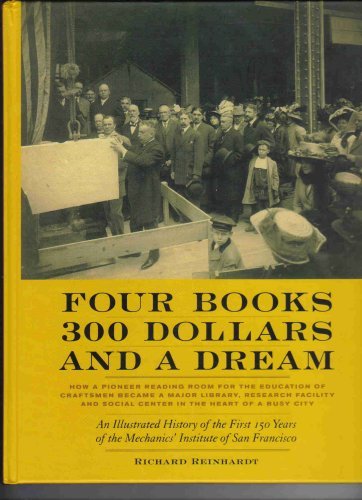
Learn more about the history of Mechanics' Institute in Richard Reinhardt's Four Books, 300 Dollars and a Dream: An Illustrated History of the First 150 Years of the Mechanics' Institute of San Francisco, available to borrow or purchase at Mechanics' Institute Library.
Site photography by Greg Habiby
Event & Meeting Room Rentals
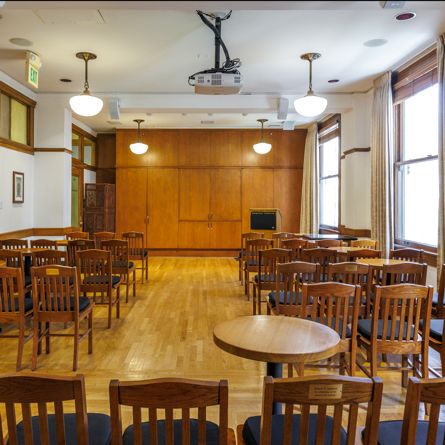
Mechanics' Institute offers meeting spaces for hourly or daily rental on the 3rd and 4th fls. of our historic building. Located one half block from the Montgomery Street Muni and BART stations, it is a convenient commuter location to host meetings, events, classes, and seminars.
Learn More & Reserve Rooms